
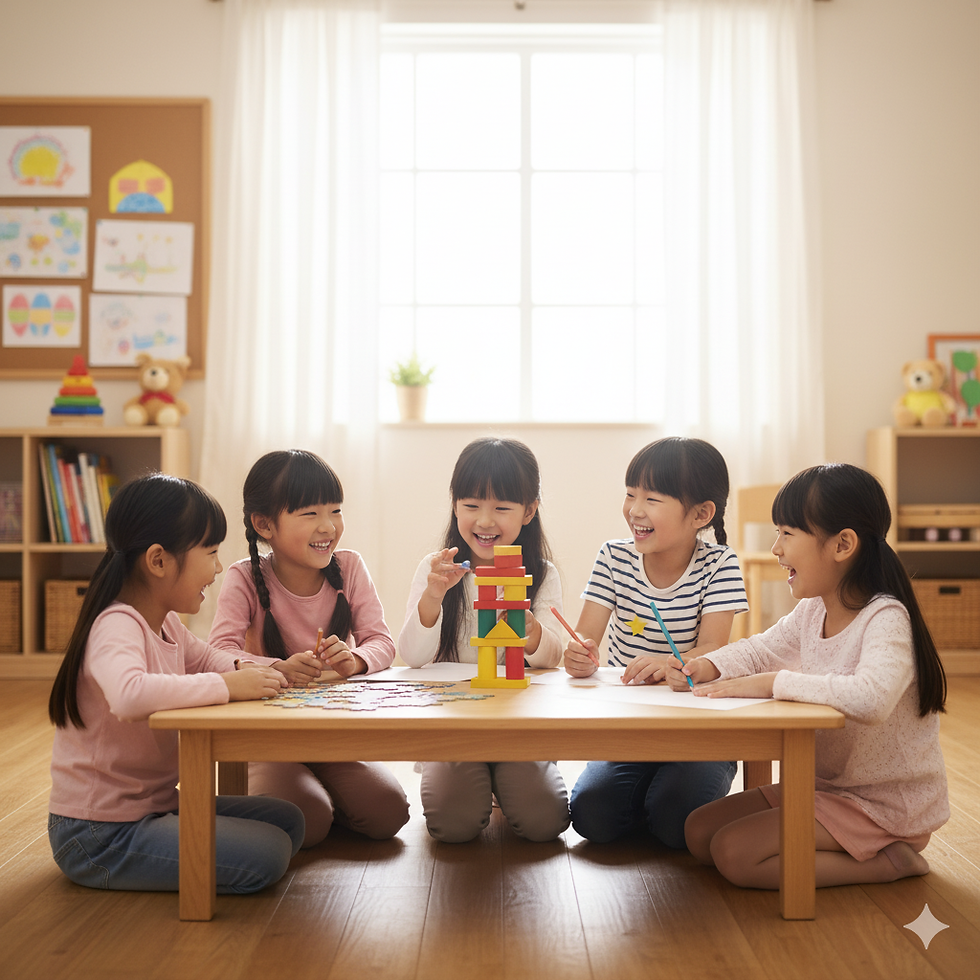

What is Social Group?
Social Groups provide children with the opportunity to practice social interaction, emotional regulation, and communication skills with peers in a fun and structured environment. Sessions are guided by psychologists and therapists who tailor activities to developmental goals.
Who Is It For?
-
Children with ASD/ADHD needing structured peer practice
-
Kids who struggle with making or keeping friends
-
Children working on turn-taking, sharing, and flexible play
-
Families seeking group-based early intervention
-
Ages 4–12 (groups matched by age/ability)
What Happens in a Group?
-
Warm-up & greetings: structured welcome and routine
-
Skill teaching: focus on one key social/emotional skill
-
Guided play: cooperative games, role-play, group activities
-
Reflection: discuss what went well, strategies for next time
-
Take-home tips: simple visuals or activities for home practice
Why Choose Social Group?
-
Peer learning in a safe and supportive setting
-
Evidence-based and play-focused
-
Builds confidence and emotional resilience
-
Skills generalised into home and school
-
Bilingual support (English & Mandarin)
FAQs
Q1: What is a Social Group?
Our Social Groups are small, supportive sessions where children practice social skills, build friendships, and develop confidence through structured play and guided activities.
Q2: Who can join?
Social Groups are typically suited for children aged 6–12 who would benefit from support in areas such as communication, teamwork, emotional regulation, and confidence building.
Q3: How big are the groups?
Groups usually consist of 4–6 children, which allows for meaningful interaction while keeping the group small enough for personalised support.
Q4: What happens in a session?
Children engage in games, cooperative activities, role-play, and guided discussions. Sessions are fun, structured, and designed to encourage participation at each child’s comfort level.
Q5: How long does a group program run?
Programs generally run in blocks of 6–8 sessions. At the end of each block, families receive a summary report of progress and recommendations.
Q6: Can parents stay?
Sessions are child-focused, so parents typically do not stay in the room. However, parents receive regular feedback and are encouraged to discuss goals with the facilitator.
Q7: What if my child is shy or anxious?
Facilitators are trained to support children at their own pace. Many children who start out quiet quickly feel comfortable and begin to engage after a few sessions.
Q8: Do you accept funding or rebates?
Yes. NDIS funding (Capacity Building – Improved Daily Living) is accepted. Medicare and private health rebates may also be available depending on your child’s eligibility.
Q9: What is your cancellation policy?
Please cancel at least 48 hours in advance to avoid a cancellation fee.
Contact us
Address
30 Lydnhurst Crescent,
Box Hill North, VIC 3129
Please enter through Lyndhurst Crescent